Saturday, 25 May 2019

Causes of soil pollution | Causes of land pollution

The causes of soil pollution are classified into the following categories.

1) Municipal Solid Waste
2) Construction and Demolition waste
3) Hazardous Waste
4) Accidental Oil Spills
5) Agricultural Activities
6) Industrial Activities

Causes of Soil Pollution

1) Municipal Solid Waste: 

This class includes non-hazardous garbage, trash, and rubbish from homes,  institutions, markets, etc.

2) Construction and Demolition waste:

It includes wood, wallboard, concrete rubble, asphalt, metal objects, and other inert materials produced during construction activity.

3) Hazardous Waste:

It includes dangerous and harmful substances generated as liquid, solid, or sludge by various petroleum refineries, paper mills, chemical manufacturing companies, smelters, and many other industries. 

4) Accidental Oil Spills:

Oil leaks can happen during the storage and transport of chemicals. This can be seen at most of the fuel stations. The chemicals present in the fuel deteriorate the quality of soil and make them unsuitable for cultivation. These chemicals can enter into groundwater through the soil and make the water undrinkable.

5) Agricultural Activities:

Modern agricultural practices pollute the soil to a large extent. Huge quantities of fertilizers, pesticides, herbicides, and weedicides are added to soil to increase crop yield. The use of excess fertilizers to increase crop yields makes the soil either acidic or alkaline and pollutes it. Other chemicals damage the composition of the soil and make it easier to erode by water and air. Plants absorb many of the pesticides and when they decompose, they cause soil pollution since they become a part of the land.

6) Industrial Activities:

Industrial activity has been the biggest contributor to the problem in the last century, especially since the amount of mining and manufacturing has increased. Most industries are dependent on extracting minerals from the earth. Whether it is iron ore or coal, the by-products are contaminated and they are not disposed of in a manner that can be considered safe. As a result, the industrial waste lingers in the soil surface for a long time and makes it unsuitable for use.

Large quantity of solid wastes like unused and rejected chemicals(like sludge, press mud, sawdust, bottles, plastic materials, etc), unwanted industrial wastes generated during manufacturing processes are dumped over on the surface of the soil by almost all industries with a difference in the degree.

The larger the production base, the larger is the generation of wastes. Traditionally, these materials have been dumped around the city and causing soil pollution.


Soil Pollution Causes and Consequences
Soil pollution due to solid waste dumping

Wednesday, 22 May 2019

Soil Pollution | Define Soil Pollution | Types of Soil Pollutants: Organic soil pollutants | Inorganic pollutants in soil

SOIL: Component definition:  Mixture of mineral matter, organic matter, water, and air.

Soil fundamentals


Soil Samples
Soil Samples

What is Soil Pollution?

The deposition of waste materials  (solid and liquid) on land or underground in a way that can contaminate the soil or groundwater and can affect human health and cause nuisance is known as soil pollution.


Soil Pollution and Polluted Soil

Types of Soil Pollutants:

Soil Pollutants can be categorized into two

groups.

 1) Organic Pollutants

 2) Inorganic Pollutants

1) Organic Pollutants:

These pollutants are organic and include industrial organics and pesticides.

Industrial organics: These pollutants cause land pollution by accidents. Industrial organics include petroleum products (e.g. benzenes and Polycyclic aromatic hydrocarbons PAHs), military explosives (Trinitrotoluene TNT), and solvents used in the manufacturing processes.

Pesticides: Pesticides are organic chemicals used to control or kill pests of crops.

Pests:  A destructive insect, plant, or other animals that attack crops.

Pesticides include:

Insecticides: Used to kill insects 

Fungicides: Used to kill fungi 

Herbicides: Used to kill weeds 

Nematicides: Used to kill nematodes 

Rodenticides: Used to kill rodents 

In agricultural land insecticides, fungicides and herbicides are used in the largest quantities. All types of pesticides find their way into the soil system and causing soil pollution.

2) Inorganic Pollutants:

These pollutants have inorganic nature and include heavy metals.

Heavy metals include cadmium, chromium, copper, lead, mercury, nickel, selenium, arsenic, etc. These metals reach the soil system, enter the food chain and cause human health effects.

Soil >   Plants    >   Animals    >   Humans


Tuesday, 21 May 2019

Sources of Air Pollution

Based on origin, air pollution can be categorized into natural and anthropogenic (man-made) sources.

 Natural Sources of Air Pollution:

Examples of natural sources are pollutants from forest fires, volcanic eruptions, pollens, and dust blown by the wind.

Natural Sources of Air Pollution

Anthropogenic Sources of Air Pollution:

Examples of anthropogenic sources of air pollution are the burning of fossil fuels in the individual plant (stationary source) and automobiles (mobile sources). Other sources include agricultural activities, livestock, cities, and the burning of wood in fireplaces at homes also generates air pollutants.


Anthropogenic Sources of Air Pollution:

a) Burning of Fossil fuel and Fires
b) Transportation (Mobile sources)
c) Industries (Stationary sources)


Anthropogenic Sources of Air Pollution

a) Burning of Fossil fuels and Fires: 

The man-made cause of air pollution is fossil fuel combustion such as petrol, coal, and natural gas.

Fossil fuels are used to run transport, for heating purposes, cooking, and to produce electricity in power plants, and in industries to manufacture goods.

The burning of wood in fireplaces at homes also becomes a cause of air pollution.

The burning of fossil fuels generates many air pollutants and is involved in the formation of acid rain, smog, and soot.

Burning fossil fuels also causes emissions of harmful gases that trap heat from the sun and increase the temperature of the earth. This phenomenon is called global warming.

b) Transportation:

Transportation sources are also known as mobile sources.

The emissions from mobile sources are the major sources of air pollution in many urban areas.

Four significant air pollutants are generating by mobile sources. 

                   (1) Carbon monoxide

                   (2) Nitrogen oxide 

                   (3) Hydrocarbon 

                   (4) Particulate matter

Other important air pollutants generating by mobile sources are:

                     1- Greenhouse gases

                     2- Air toxics.

Transportation sources can be grouped into on-road vehicles and off-road vehicles.

On-road Vehicles:

These include light-duty vehicles, heavy-duty trucks, and motorcycles, which are used for transportation on the road.

 Off-road Vehicles:

These include engines, vehicles, and equipment used for agriculture, construction, recreation, transportation,  and many other purposes. Aircraft are also an off-road source of air pollution.

c) Industries:

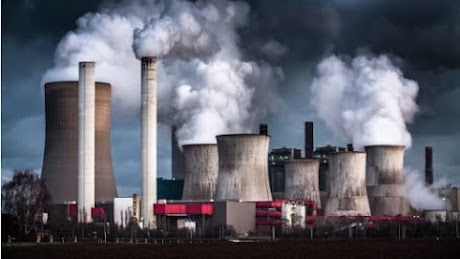
The industrial sector is responsible for large-scale air pollution. The extent of gaseous pollutants from industries is very high as compared to other sources. The number of industries is increasing due to urbanization and population pressure.

                                          Industrial Air Pollutants

Industrial Air Pollutants


Sunday, 19 May 2019

What is air pollution | Define air pollution | What are the effects of air pollution | Primary air pollutants, primary pollutants examples | Secondary air pollutants, secondary pollutants examples | Criteria air pollutants

Definition:

The presence of gases, liquids, and solids in the atmosphere in high enough levels that can harm different components of the environment including humans, living organisms, and materials is called air pollution.

Air Pollution


Air Pollution Effects on Leaves of Plants

How does air pollution affect fish?

  Detrimental effect of Air pollution Corrosion on Building Materials and Historical Structures

Types of Air Pollutants:

Air pollutants can be classified into two categories.

 (1) Primary Air Pollutants  

 (2) Secondary Air Pollutants

Primary and Secondary Air Pollutants

1- Primary Air Pollutants: 

The harmful chemicals which are emitted directly into the air from natural and anthropogenic sources are called primary air pollutants.

Examples: Carbon monoxide (CO), Carbon dioxide (CO2), Nitric oxide or Nitrogen monoxide (NO), Nitrogen dioxide (NO2), and Sulfur dioxide (SO2).

2- Secondary Air Pollutants:

Some primary air pollutants undergo reactions with one another and other air pollutants in the atmosphere to form new harmful chemicals. These pollutants are called secondary air pollutants.

Examples: Sulfur trioxide (SO3), Sulfuric acid (H2SO4), Nitric acid (HNO3) Ozone  (O3), Hydrogen peroxide  (H2O2), Peroxyacetyl nitrates (PANs), Nitrate (NO3-), Sulfate (SO42−) salts.

Criteria air pollutants: 

The term criteria air pollutants originated with the US 1970 Clean Air Act. That law required EPA to set standards (National Ambient Air Quality Standards, NAAQS) to protect human health and welfare from pollutants in ambient air. Before setting standards, the EPA had to identify the most serious pollutants. To do so it used specific criteria (characteristics of the pollutants, and their potential health and welfare effects). 

The six pollutants that the EPA identified to account for the large majority of air pollution, both in the United States and worldwide.

1) Carbon monoxide(CO)

2) Sulfur dioxide (SO2)

3) Nitrogen oxides (NOx)

4) Ozone (O3)

5)  Particulates or particulate matter (PM10).

Friday, 17 May 2019

Polluted Water| Polluted Water Sources | What is Sewage Effluent | Industrial Effluents

Natural sources: 

Natural sources of water pollution include erosion, animal wastes, and the leaching of minerals from rocks.

Anthropogenic sources:

The anthropogenic sources of water pollution can be classified as:
 a) Sewage Effluent
 b) Industrial Effluent
 c) Agricultural runoff

Sources of Water Pollution


a) Sewage Effluent:

Sewage is the spent water of the community. Domestic sewage (human wastes, soaps, and detergents) contains 99% water and 1 % solid.

Characteristics of Sewage Effluents:

Organic solids: proteins, carbohydrates and, fats.

Inorganic solids: Grit, Salts and metals, insoluble minerals and, heavier particles.
Domestic sewage is generally discharged into water bodies like rivers, lakes, etc. This causes severe water pollution.

b) Industrial Effluents:

The major source of water pollution is the wastewater discharged from different industries.

1. Textile industry 

2. Industry

3. Dairy Industry 

4. Fertilizers Industry

5. Petroleum

6. Metal-Plating Industry

7. Pharmaceutical Industry

8. Rubber Industry

Characteristics of Industrial Effluents:

1. Textile Industry: 

Wastewater containing high Nitrogen and BOD (Biological Oxygen Demand). The wastewater also has high dyes, grease, and high pH due to the use of NaOH in the operations.

2. Sugar Industry: 

Wastewater has high BOD, large amount of organic matter and solids. It causes organic pollution and odorous conditions at the disposal sites.

3. Dairy Industry:  

The wastewater has a high amount of milk constituents, a high BOD, and organic matter. It causes depletion of oxygen and odorous conditions.

4. Fertilizers Industry:  

The wastewater containing high amount of ammonia, phosphorous, and fluorides.

5. Petroleum Refining: 

 The wastewater from this industry has a high BOD, Oils, phenols, sulfides, toxic substances, and high temperature.

6. Pulp and Paper Industry: 

The wastewater of this industry contains high BOD and organic matter.

7. Metal Plating Industry:

 The wastewater containing cyanides, nickel, chromium, and zinc. The pollutants are highly toxic to living organisms.

8. Pharmaceutical Industry: 

The composition of wastewater depends upon the type of chemicals (drugs) manufactured in the industry.  The wastewater has either high alkalinity or high acidity. The effluents also contain toxic organic dissolved and suspended matter.

9. Rubber Industry:  

The wastewater has a high BOD, chlorides, and suspended solids. It has variable pH with a bad odor.

c) Agricultural runoff:

·      Chemical fertilizers and pesticides have become essential for present-day high-yielding crops.

·     Runoff from agricultural fields and animal farms is the source of agricultural effluents. Consequently, they have become a potential source of water pollution. 

·         Fertilizers contain major plant nutrients mainly nitrogen, phosphorous, and potassium.

·         Excess fertilizers may reach the groundwater by leaching or may be mixed with surface water of rivers, lakes, and ponds by runoff and drainage.

Sources of Water-pollution


Sunday, 5 May 2019

Sources of pollution | Point source pollution | Non-point sources of pollution | Point source pollution examples | Non-point source pollution examples

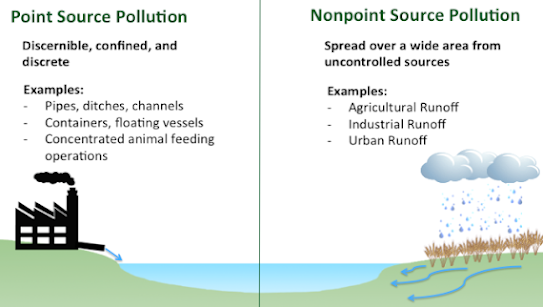
There are two sources of pollution based on emissions or discharge of pollutants i.e. point source pollution and non-point source pollution.


 a) Point Source Pollution:

The sources that are located at specific places and discharge pollutants at specific locations through sewer pipes, smokestacks, exhaust pipes, drainpipes into air, water bodies, or soil are called point sources.

Examples: Drain pipes of a factory, exhaust pipe of an automobile, and the smokestack of industrial plant.

Point Source Pollution

b) Non-Point Source Pollution:

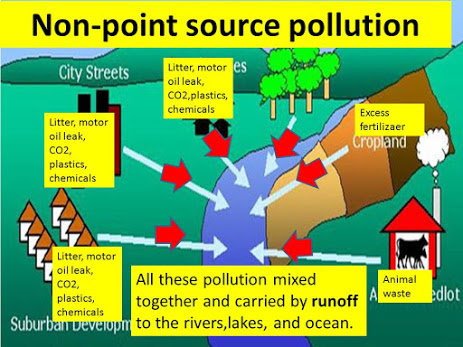
The discharge of pollutants into the air, water, or soil at non-specific locations is called non-point source pollution.

Examples: Run-off of pesticides and fertilizers from agricultural fields and emissions from open biomass burning.                            

Non-Point Source Pollution


Point Source and Nonpoint Sources of Pollution


Sunday, 28 April 2019

Pollutant | What is Pollutant | Definition of Pollutant | Types of Pollutants | Classification of Pollutants | Biodegradable pollutants | Non-Biodegradable pollutants

    Definition of Pollutant:

Any substance which causes pollution is called a pollutant. e.g. plastics, pesticides, lead, mercury, Carbon oxides, Particulate matter, bacteria, etc. Pollutants damage the quality of different components of the environment i.e. air, water, and soil.

A pollutant is any solid, liquid, or gaseous substance present in such concentration as may be or tend to be harmful to the environment.

Soil Pollutants
Soil Pollutants
Air Pollutants Picture
Air Pollutants

Water Pollutants Picture
Water Pollutants 

Biodegradable Pollutants

Biodegradable Pollutants

Types of Pollutants:

Pollutants can be divided into four types:

Solids: Metal, plastic, paper, wood, leaves, human waste, animal waste, etc

Liquid: Oil, Chemicals (Acids, bases), pesticides, detergents, etc

Gaseous: Chlorofluorocarbons (CFCs), Methane, Hydrogen sulfide, carbon dioxide, carbon monoxide, Nitrogenous gases (NOx), Sulfurous gases (SOx), etc. 

Biological: Bacteria, fungi,  viruses, etc.

Classification of Pollutants:

The pollutants can be classified into two basic groups:

(a) Degradable pollutants or Bio-degradable Pollutants

(b) Non-degradable Pollutants:

(a) Degradable pollutants or Bio-degradable Pollutants:

These are organic substances that can be decomposed by natural processes like biological or microbial action.

The degradable pollutants can be further subdivided into two categories:

(i) Rapidly degradable pollutants:

For example, the decomposition of sewage and wastes of animals and plants is a faster process.

(ii) Slowly degradable pollutants:

    For example, degradation of synthetic compounds and radioactive elements.

(b) Non-degradable Pollutants:

     The substances or products which cannot be broken down by the natural processes i.e. by the action of microbes. 

These can be further subdivided into two more classes:

(i) Waste:   Examples: glass, phenolic compounds, aluminum cans, etc.

(ii) Poisons: Examples: pesticides, heavy metals like mercury, lead, etc.


Waste | Definition of Waste | Types of Waste | Sources of Waste

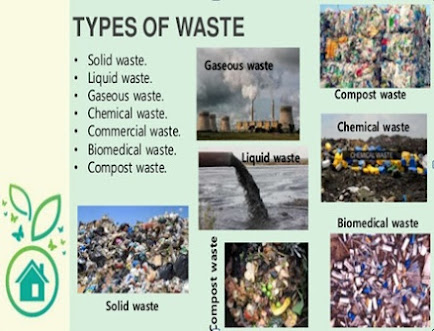
Definition: Waste (also known as rubbish, trash, refuse, garbage, junk) is any unwanted or useless materials. Waste is any substance that is...